We install and remove wallpaper, prepare walls, and work with traditional, peel-and-stick, commercial and specialty coverings. Find the service that fits the material and the starting condition of your wall.
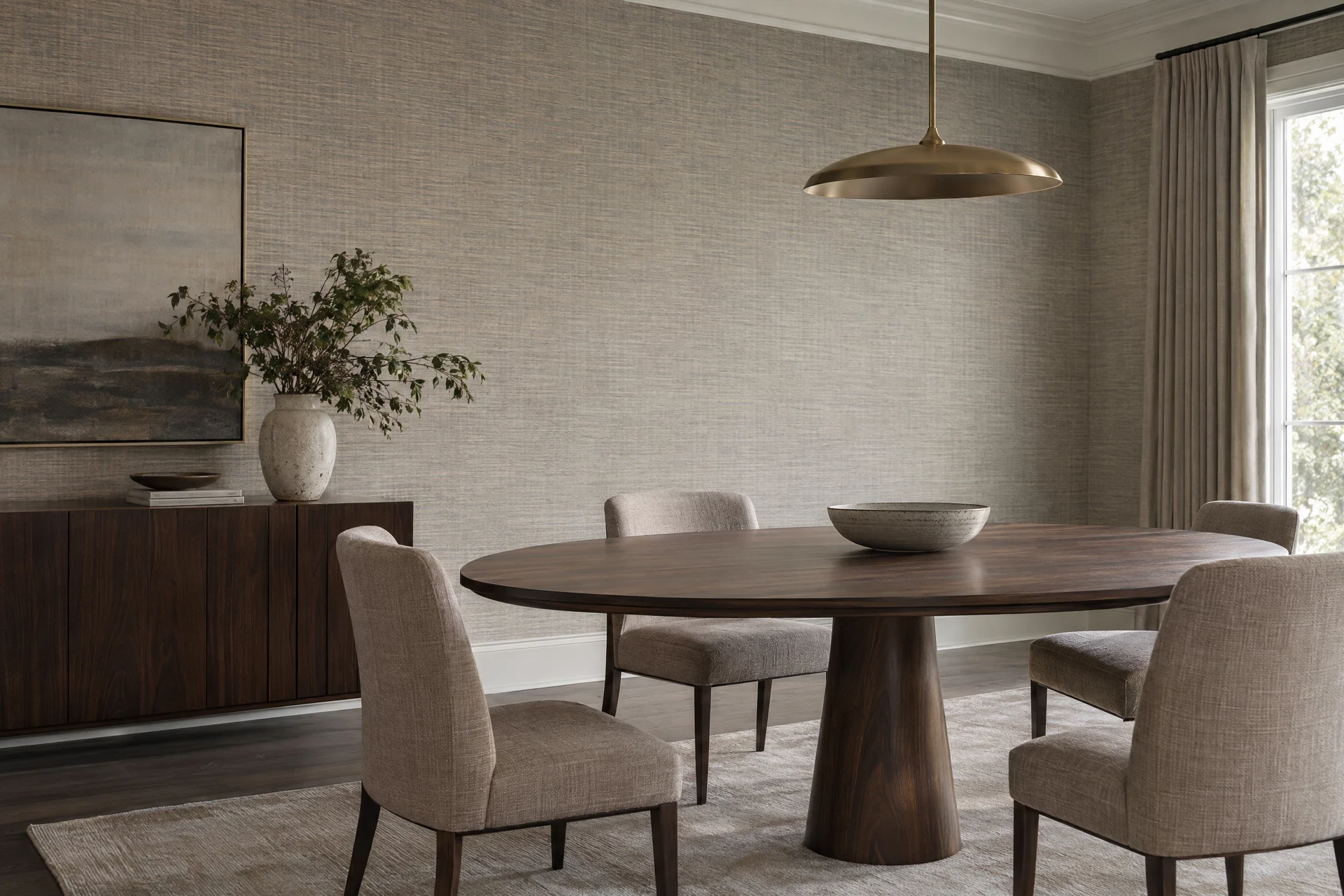
Wallpaper bringing line and texture to a carefully composed interior wall.
Installation
Wallpaper installation
A considered installation starts with the layout, not the first strip. Pattern repeat, the wall's shape and the position of windows or doors affect where the design begins and how it reads across the room.
Our installers work with the selected covering's instructions: whether paste belongs on the wall or the backing, which adhesive is appropriate, and how seams and edges should be handled. Nonwoven papers, vinyls and delicate printed goods do not all behave alike.
Matching the design between strips and trimming carefully at ceilings, baseboards and openings helps the covering sit naturally in the architecture. We discuss the material and surface before confirming the scope of work.
Removal is not just pulling off a visible face layer. A backing or adhesive residue may remain, and the underlying wall may need attention before paint or new wallpaper can be considered.
The covering, its attachment and the substrate affect how it comes down. We assess that starting condition rather than promise a damage-free shortcut for every wall.
Self-adhesive wallpaper still needs a planned layout and a suitable surface. Many products call for smooth, clean, dry walls; visible texture, dust or an incompatible paint finish can interfere with adhesion.
Removable does not mean suitable for every wall or guaranteed to leave every finish unchanged. We review the chosen product and its instructions, including requirements for recently painted walls.
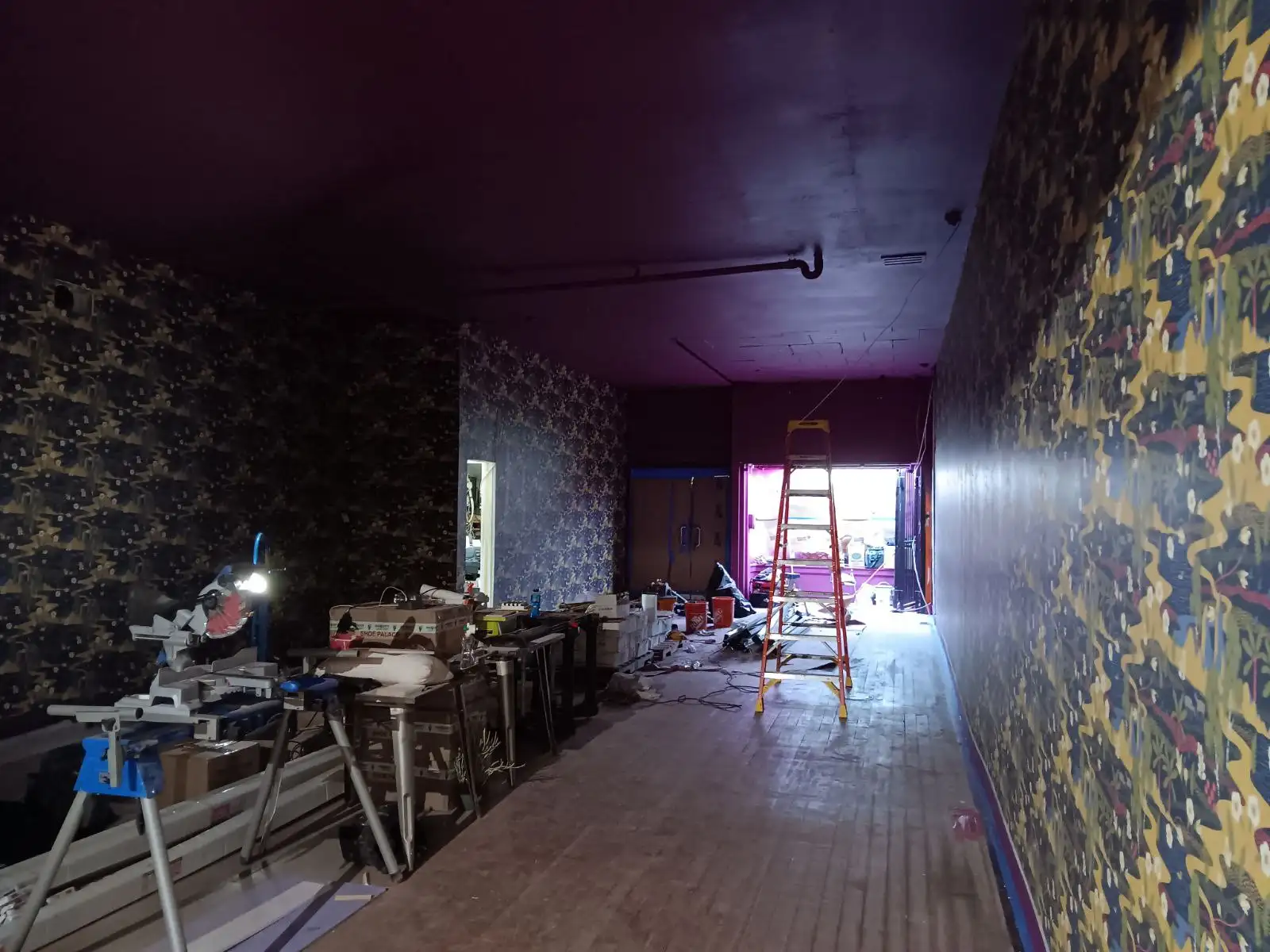
We offer commercial wallpaper installation for work and customer-facing interiors. Product specifications, wall condition, pattern direction and the way the space is used help define the project.
Access, existing furnishings and proposed work sequencing are useful to discuss when planning. Any product performance or fire-rating requirement belongs to the selected material and project specification; we do not assume compliance from appearance alone.
A wall should provide a sound, clean, dry base for the selected covering. Old adhesive, uneven patches, cracks, loose paint or pronounced texture may need attention before installation.
Preparation and the appropriate primer depend on the substrate, adhesive and product instructions. Wallpaper is not a repair for an unresolved moisture problem, and a textured wall is not automatically ready for a smooth covering.
Murals, natural textures, metallic finishes and delicate coverings require attention to their particular handling and layout instructions. A mural may arrive as numbered panels; a textile or natural-fiber covering may show characteristics that differ from a uniform printed repeat.
We discuss the material before defining the work. The aim is to plan for the covering's real behavior rather than treat every roll as interchangeable.
Existing coverings and surface condition change the preparation needed for a new finish. Ask about removal and preparation together if you are replacing wallpaper.
Questions about the work
Can an existing wallcovering be discussed before it is removed?
Yes. Describe the existing covering and what you want next. The backing, adhesive and wall condition may affect removal and preparation; you do not need to strip the room before asking about the work.
Is peel-and-stick the same planning process as traditional wallpaper?
No. Traditional wallpaper uses a product-appropriate paste process, while peel-and-stick brings its own adhesive backing and surface limitations. Both need accurate layout and alignment, but preparation and handling must follow the selected product.
Not sure which service heading fits?
That is completely fine. Describe the room and the material as you understand them, and the conversation can begin there.